How to Become a Physical Therapist? How Long Does It Take?
By Broxer
•
Dec 12, 2020
•
7 min read
Introduction
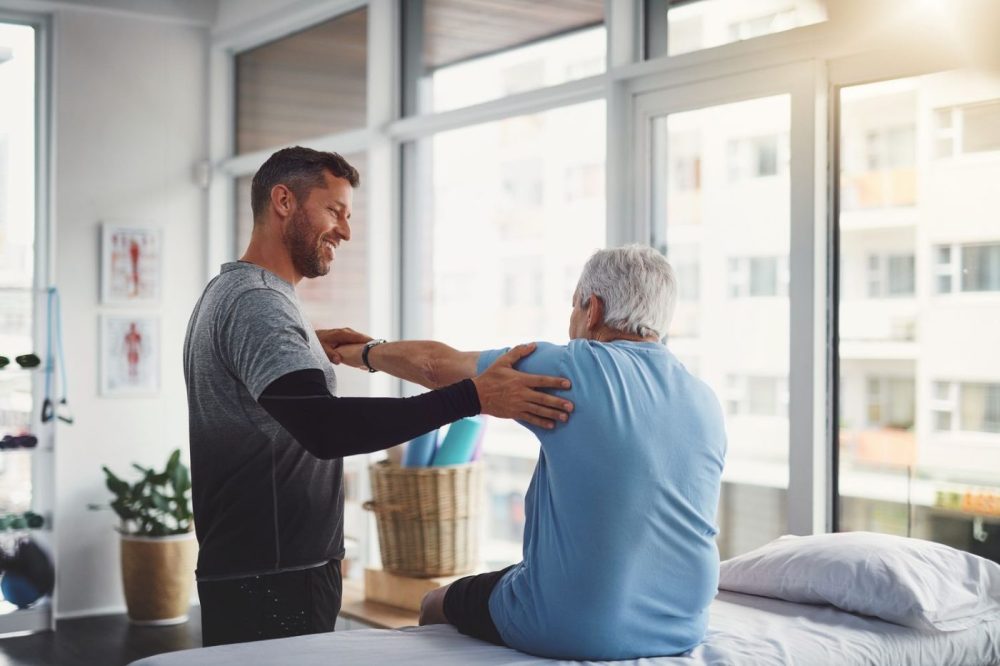
Physical therapists are individuals who help a patient to recover. Such patients have undergone injuries, suffer from chronic conditions or severe accidents, which prevent them from performing the usual movements. So, a Physical Therapist maintains a record of the patients’ progress. Through their strategies for individuals and exercise plans, they help the patients to heal. Hence, such individuals are concerned with rehabilitation and taking care of the people to the utmost extent. Their functioning entails assessing each person and then formulating appropriate techniques for him or her. Such techniques aim to improve mechanical strength and motion, facilitate flexibility, and help the patient manage pain. Physical therapists can take care of people of any age. Such patients may be a newborn or an older person. Moreover, the people who want to become healthier can also avail the services of a proficient physical therapist.How Can We Become a Physical Therapist?
Since physical therapists’ activities have greater consequences on the patients’ lives, they must procure more significant pieces of training. Their education relates to various subjects like biology, kinesiology, and physical fitness. Moreover, to gain a strategic advantage over your competitors, you can also procure education in psychology. This is because psychology helps to enhance the emotional intelligence and grasping power of the people. Through this, you are likely to understand the customers’ better and hence, improve their conditions.How Did the Word Physical Therapy Came Into Existence?
In 1894, the Montreal Medical Journal had an English article. The article contained the word physiotherapy. Over the time, the word “physiotherapy” transformed into “Physical therapy.” But what are the degrees which an individual needs to procure to practice this profession? How long does it take to become a physical therapist? Moreover, what are the prerequisites? Let us have a glance at them.Prerequisites
Like any other profession, you need the required Bachelor’s degree to initiate your physical therapy career. But to procure this degree, there are specific prerequisites that you need to follow. First of all, physical therapy requires you to take up various healthcare or science courses. Secondly, your under graduation GPA also has a significant impact on your further physical therapy programs.Bachelors Degree
A bachelor’s degree serves as a ticket for you to enroll yourself in the doctoral program. So, you can take up the Bachelor’s degree in the related domain. Such subjects include Physiology, Biology, Anatomy, physics, and chemistry. But remember to modify your subjects according to the requirements of the specific doctoral degree. The Bachelor’s degree helps the students to know the functioning of a physical therapist. It also teaches them about the following skills and subjects:Pharmacology
Pharmacology helps prospective applicants to know the drugs which should be given to the patients. It facilitates the students to understand the psychological and physical consequences of various drugs. Moreover, the Bachelor’s degree provides cognizance of the drug abuse issue and the different drugs suitable for specific conditions.Healthcare Statistics
The Health Sciences statistics class teaches the students a whisk of the statistical procedures and the healthcare methods. Such training teaches the applicants about assessing the results from the data of a patient. Moreover, the students learn to have cognizance of various statistical techniques like inferential statistics, variance, or correlation.Health Psychology
With the help of Health Psychology, the students learn how to enhance their emotional intelligence. They can adequately know the mental health problems of the patient related to their physical injury. This further enables them to truncate the pain of the victim. And, thus proffer nutritional suggestions regarding the pain and stress.Athletic Injuries
This subject tends to teach the various athletic injuries which a victim may undergo. Moreover, the students learn the causes and the treatment procedure of these injuries. Such practices entail the treatment of athletic trauma or how sports medicine is applied.DPT Program
The next step in the process of becoming a physical therapist is to procure a DPT program. It stands for Doctor of Physical Therapy degree. The Commission on accreditation in physical therapy education accredits this program. According to this Commission, most of the exams are for three years. Moreover, the statistics of 2014 show that there were 228 physical therapy programs previously. However, some of the deputy programs proffer a 3 + 3 year education to the students. Such training entails three years of undergraduate courses or a Bachelors’s Degree. After this degree, the student can move forward to enroll in another three years DPT degree. Few of the institutions directly employ candidates from high school for such courses. They have to meet the standard requirements of having a high GPA in undergraduate courses. To become a proficient physical therapist, you need to enroll yourself in the DPT programs. The service which helps you in this regard is the physical therapist centralized application services (PTCAS). The DPT programs compel the students to undergo a clinical internship. You can take up such an internship in subjects like Orthopaedic care. Moreover, different programs have different requirements that you need to adhere to. Previously, the prospective physical therapists could choose between a doctor of physical therapy (DPT) or a master of physical therapy (MPT). However, from 2015, the applicants have no choice between such programs. They are allowed to enroll only for the DPT. The deputy programs help you to get an insight into the following subjects. These subjects include:- Complex Conditions
- Applied, Physical Therapy
- Life Span Development
- Pharmacotherapy
- Functional Anatomy
- Clinical Practice
- Fundamentals of Movement
- Kinesiology and Biomechanics
- Research Method
- Exercise Physiology and Principles of Exercise